The secrets of collaboration – Design Inspiration
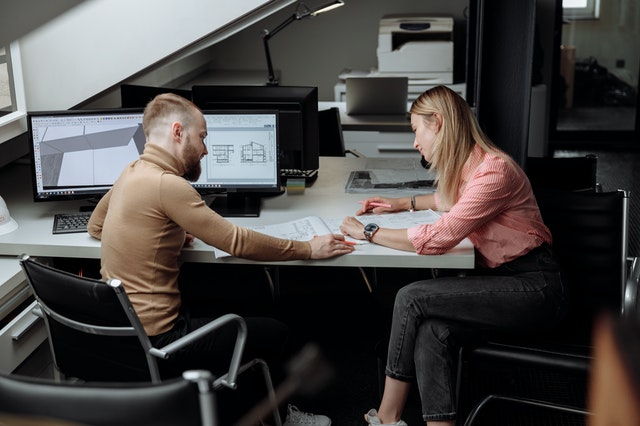
Collaborative Design, as the name implies, is a method of design that incorporates feedback from a variety of sources. Graphic designers, researchers, developers, and others combine their skills to produce designs that are far more than just pleasing to the eye.
Collaborative design is when a group of people participates in the whole process of developing an asset, from brainstorming to assigning tasks to assigning team members.
It’s a multi-step process that includes planning and strategy, all of which focuses on feedback and is given in a collaborative manner. Consider collaborative design in the same way that you would any other planning strategy: it has a beginning, a middle, and an end. Nonetheless, using this method, each stage entails real-time evaluation and approval of the asset.
Following the completion of an abstract idea, teams collaborate to develop the intended result, with each phase differing from one team to the next and from one product to the next. Design collaboration may be thought of as a multi-step method for conceptualizing a design concept.
Any design process is multidimensional and complicated in and of itself. The marketing department initially develops a brief that comprises project specifics such as design dimensions, dates, valuable references, and so on, which the creative design team then reviews and accepts. Here are a few concepts that might help in design inspiration.
- Establish a Rapid Decision Making Model:
The RAPID Decision Making Model is a paradigm for making better decisions in businesses. It specifies who should be in charge of which tasks for each difficult choice that must be taken.
Who makes a suggestion, who agrees to a recommendation, who makes the choice, who gives input to a recommendation, and who makes the ultimate decision are all defined in the model. When disagreements arise, this model is incredibly helpful since it explains who is responsible for a particular task in order for the team to reach a final conclusion.
- Treat disagreements as opportunities:
When it comes to confrontations, the majority of individuals are likely to respond negatively. It has the potential to push back the deadline and demoralize the entire crew. It does, however, present an opportunity to identify the best answer. When confronted with a disagreement, the most essential thing is to express your point of view while simultaneously being respectful of other people’s opinions. The majority of the time, each option includes advantages and disadvantages, and choices must be made.
It pushes the team to prioritize within restrictions and gain a thorough understanding of the company’s most important issues.
Conflicts can stifle decision-making, but the proper choice will ultimately expedite the process.
- Involve the right personnel at the right time:
People from many functions are involved at various levels during the product development process. Some people are more interested in the beginning, while others are more engaged as the launch date approaches.
It is critical to keep everyone on the same page, but we must also consider who to include at certain phases. Involving the appropriate individuals at the appropriate moment improves team efficiency and keeps the dialogue on track.
- Communicate with your target audience in mind:
You need to tailor your communication to your target audience. When pitching your design to the executive team, be clear on the key message you want to convey and prioritize what you show them in order to gain their approval. Don’t waste time on little details that can draw their focus away from the actual point. When it comes to communicating your final design to engineers, though, the specifics are crucial. Make sure you’ve considered every detail so that they know exactly what to create.
There are instances when you have no idea what your audience wants. Don’t be scared to ask questions. Tell them what you have to give so they may pick and choose what they require from you. It is always more beneficial than creating assumptions on your own. Also, not everyone understands your field as well as you do. When introducing your work, put yourself in the shoes of the other person and think about what you take for granted.
Aside from proactive communication, it’s also beneficial to “passively” communicate what you’re working on. One of the techniques is to have a centralized location where you can save your files and offer them in an easy-to-scan format, which eliminates extra conversation about “where to locate your current design.”
- Create a powerful team with design superpowers:
It’s a great start for you as a person who wants to learn how to cooperate. A successful team, on the other hand, requires more. What counts most is how a team performs as a whole, not just an individual’s talent. Everyone should be familiar with one another and care enough about one another to assist one another. The key to success is the relationship. As a result, you must assist in the formation of a strong team bond.
A “walk the wall” activity is one of the simplest yet most effective methods. All you have to do now is hang design flows on the wall and invite your cross-functional team to meet. Magic happens when people are standing in front of a wall of designs. People begin to make comments, share fresh ideas, provide criticism, and “+1” on someone else’s comment since the product they’re working on has become so palpable. The wall shows what everyone is working on and sparks discussion among the team.
Another common way for designers to assist in the formation of a collaborative team is to host workshops. A workshop gives a wonderful chance for team bonding in addition to the various benefits it brings to the product. Because all participants are present in a room with different tasks to complete, workshops provide an immersive setting for individuals to get to know one another. Many of the first talks take place in seminars, when you meet coworkers with whom you don’t usually communicate.
- Use of proper Collaboration Tools:
A poor-quality collaboration platform might be extremely disruptive when you’re attempting to work with several team members. To harmonize the working connection between your team members, you should employ the correct design collaboration tools . If you use the right collaboration software, you’ll be able to achieve enhanced efficiency, improve the quality of your designs.
CONCLUSION:
Following these steps will help you interact more effectively with your coworkers, resulting in a collaborative culture within your company. It enables everyone to take part and have a sense of ownership over the goods they work on. That’s important not just for the quality of your job, but also for the overall cohesiveness of your team.